Sweepstakes casinos · Brief · 7 min read
Sweepstakes casinos: a checklist for streamers, affiliates and promoters
What the FTC Endorsement Guides, four state texts and three platforms’ own policies say to someone who markets a sweepstakes casino, and a checklist drawn from them.
A sweepstakes casino reaches players through people as well as ads: streamers who play it on camera, affiliates who send traffic for a fee, promoters who run giveaways. This brief sets out what the FTC’s endorsement rules, four state texts and three platforms’ policies say to someone in that position, and ends with a checklist. It does not say whether any operator’s product is lawful, and it gives no advice about any person’s own situation.
The federal rule: material connections
The FTC’s Guides apply to any paid or incentivized endorsement. The disclosure rule is in § 255.5, and it names the benefits that count:
When there exists a connection between the endorser and the seller of the advertised product that might materially affect the weight or credibility of the endorsement, and that connection is not reasonably expected by the audience, such connection must be disclosed clearly and conspicuously. … Material connections can also include other benefits to the endorser, such as early access to a product or the possibility of being paid, of winning a prize, or of appearing on television or in other media promotions.
The Guides give an example for affiliate links, which is the arrangement most affiliate programs use:
The blogger writes the content independently of the marketers of the coffee makers but includes affiliate links to websites on which consumers can buy these products from their marketers. Whenever a consumer clicks on such a link and buys the product, the blogger receives a portion of the sale. Because knowledge of this compensation could affect the weight or credibility site visitors give to the blogger's reviews, the reviews should clearly and conspicuously disclose the compensation.
Liability runs to more than one party. The advertiser, the endorser and intermediaries are each addressed:
Advertisers are subject to liability for misleading or unsubstantiated statements made through endorsements or for failing to disclose unexpected material connections between themselves and their endorsers. … Endorsers may also be liable for failing to disclose unexpected material connections between themselves and an advertiser, such as when an endorser creates and disseminates endorsements without such disclosures. … Advertising agencies, public relations firms, review brokers, reputation management companies, and other similar intermediaries may be liable for their roles in creating or disseminating endorsements containing representations that they know or should know are deceptive.
State texts that name promotion
California and New York name a “media affiliate” among those who may not support the promotion of an online sweepstakes game:
(b) It is unlawful for any entity, financial institution, payment processor, geolocation provider, gaming content supplier, platform provider, or media affiliate to knowingly and willfully support directly or indirectly the operation, conduct, or promotion of an online sweepstakes game within this state.
(b) It shall be unlawful for any applicant, licensed entity, financial institution, payment processor, geolocation provider, gaming content supplier, platform provider, or media affiliate to support the operation, conduct, or promotion of online sweepstakes games within the state of New York.
New Jersey’s general offense of promoting gambling reaches a person who shares in proceeds or who materially aids, including by solicitation or inducement. Montana’s reaches one who advertises for or solicits. Both apply to “gambling activity” or an “illegal gambling enterprise”, and whether a given sweepstakes product is within those terms is the question the statutes brief of this series takes up:
A person is guilty of promoting gambling when the person knowingly: (1) Accepts or receives money or other property, pursuant to an agreement or understanding with any person whereby the person participates or will participate in the proceeds of gambling activity, including, but not limited to, gambling activity that occurs online, unless such gambling activity is under the regulation and control of the State; or (2) Engages in conduct, which materially aids any form of gambling activity. … toward the solicitation or inducement of persons to participate therein;
23-5-154. Soliciting participation in illegal gambling activity prohibited. A person who purposely or knowingly advertises for or solicits another person to participate in an illegal gambling enterprise or use an illegal gambling device is guilty of a misdemeanor crime and is punishable under 23-5-161 and 23-5-162.
What the streaming platforms say
Twitch bars links and affiliate codes to sites with certain game types and says free or social versions of those sites are also barred:
We do not allow users to share links or affiliate codes to sites that contain slots, roulette, or dice games. … Free or social versions of the prohibited gambling sites are also prohibited. … The restriction on prohibited gambling sites applies whether or not you personally participate in gambling activity.
The page lists specific prohibited domains. This brief does not say whether any sweepstakes operator is within Twitch’s categories.
Kick permits affiliate links and sponsored gambling content on conditions, and says how a paid promotion is to be disclosed:
Creators may share affiliate links or engage in sponsored gambling content provided they comply with all applicable local laws and regulations. Sponsored gambling is permitted only for platforms holding valid licenses in the relevant jurisdiction. Creators must clearly disclose the presence of affiliate links. Disclosures should be clear and conspicuous, placed close to the link or mentioned audibly during the stream. … Paid promotions must include a visual overlay (e.g. #Ad or #Sponsored in the livestream title) and a verbal disclosure at the beginning of a sponsored segment.
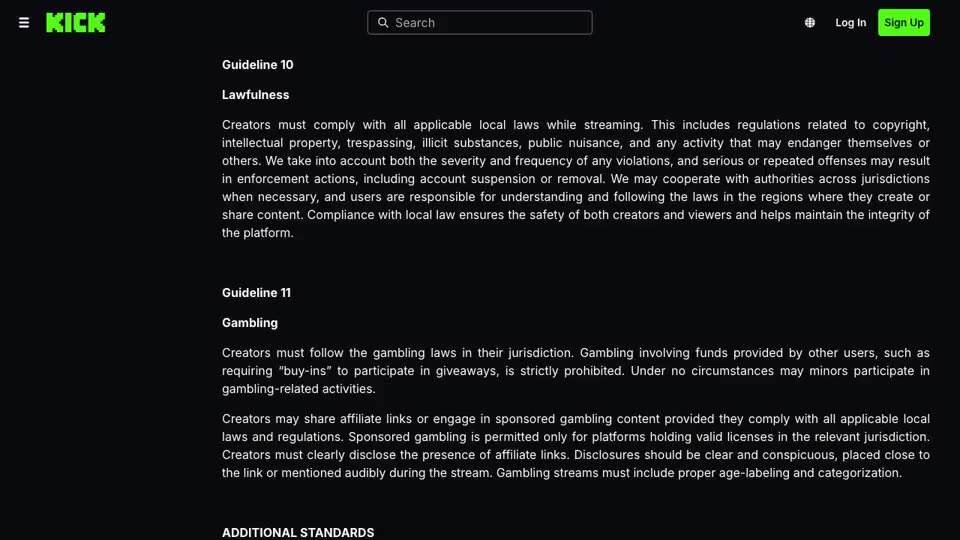
Kick’s public Community Guidelines, scrolled to Guideline 11, Gambling: the rule on buy-ins, the paragraph on affiliate links and sponsored gambling, and the disclosure and age-labeling sentences. The site’s sidebar of live streamers was hidden.
What the video platform says
YouTube lists uncertified online gambling sites among the regulated services a creator may not link to or facilitate access to, and its separate article says what a link must meet:
Don't post content on YouTube if it aims to directly sell, link to, or facilitate access to any of the regulated goods and services listed below. … Uncertified online gambling sites … Facilitating access to an online gambling or sports betting site that is not certified.
We only allow links to online gambling sites that meet local legal requirements. If you want to link to or promote an online gambling site, make sure the domain is certified by Google Ads.
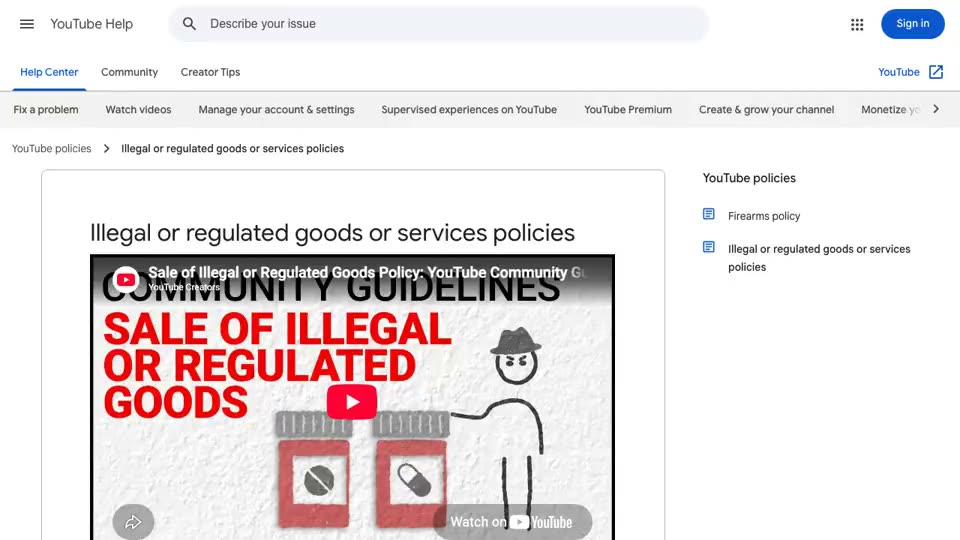
YouTube’s public policy page on illegal or regulated goods or services, scrolled through the list of regulated goods and services (including uncertified online gambling sites) and into the examples section.
What the enforcement record says about advertising
Two documents in this series’ record address how an operator advertised. The New York findings are the Attorney General’s, and the respondents neither admit nor deny them (¶ 13):
7. Respondents widely advertised their games in New York, including through social media and podcast advertisements. 8. Certain of Respondents’ advertisements featured descriptions of users winning large amounts of money.
Findings. The respondents neither admit nor deny them (¶ 13).
Florida’s complaint alleges that operators used influencers. Its caption names VGW’s companies and three payment-service companies as defendants and names no influencer:
The VGW Defendants have engaged influencers and celebrities to lend their star power and credibility to the misrepresented “legality,” “safety,” and “free” nature of the VGW Defendants’ operations.
An allegation in a complaint. No court has decided it.
A checklist for someone who markets a sweepstakes casino
- Disclose the relationship where the audience sees the claim. The FTC’s rule covers payment, free products and the chance of a prize (§ 255.5(a)); Kick asks for the disclosure close to the link or said aloud.
- Disclose affiliate links and a share of sales. The Guides’ blogger example (§ 255.5(b)(11)) is the arrangement most affiliate programs use.
- Know who else is addressed. Advertisers, endorsers and intermediaries are each named in § 255.1(d)–(f), and an advertiser may be liable even where the endorser is not.
- Read each state’s verb. California and New York say “support … promotion” and name a “media affiliate”; New Jersey reaches proceeds and “solicitation or inducement”; Montana reaches one who “advertises for or solicits”. The texts differ, and none was read with a court’s construction.
- Match the platform’s category rule before posting a link or code: Twitch (links and affiliate codes, and free or social versions), Kick (valid licenses in the relevant jurisdiction, age-labeling) and YouTube (domains certified by Google Ads).
- Keep to what the operator’s own rules state about cost, prizes and eligibility. Florida’s complaint treats claims about legality, safety and “free” play as the issue, and New York’s findings note advertisements that featured large wins.
- Check the operator’s published list of excluded states before sending traffic from a state. The operators’ lists are in the leaving-a-state brief of this series.
- Keep a record of each disclosure, link and program term, with dates. The texts above change, and the operators’ and platforms’ pages are dated 2026-10-16.
What this brief did not read
- Any operator’s affiliate agreement. The pages tried did not publish one without an account, so the brief says nothing about commission terms or an operator’s own state exclusions for affiliates.
- The FTC’s influencer-disclosure guide and any FTC action about gambling promotion. The brief rests on the text of Part 255.
- Instagram, TikTok and Discord policies, and how any platform enforces its gambling rules.
- Any court’s reading of the four state texts.